MuseOS
Building a platform that connects music creation with distribution, rights management, community, and placement opportunities.
- My role
- Solutions Architect & AI Solutions Architect
- Status
- In development with artist community features live
- Categories
- Product Development & Scale
Outcome
The artist community entry experience is live. Distribution, rights workflows, and sync placements are in development.
In development — parts of this product have not shipped yet.
Business context
The founder wanted a US-based partner to build a new music platform at a lower cost and faster pace than a traditional agency — a trusted creative ecosystem made concrete through music distribution, rights, community, and sync-placement opportunities.
The challenge
Artists face fragmented workflows for distributing music, protecting their work, tracking usage, and collecting payment. The founder also saw an opportunity to connect artists with industry professionals seeking music for films, television, games, and other media.
The goal: bring the artist journey into one platform, from uploading and protecting a song to finding ways to distribute and monetize it.
My role
I served as Solutions Architect and AI Solutions Architect, working directly with the owner on business needs, the solution plan, and priorities. I structured the work with my engineers and kept the owner involved through regular progress updates and delivered outputs.
The engagement included the website, branding and logo, SaaS design, development, and a prioritized product roadmap.
How the workflow changes
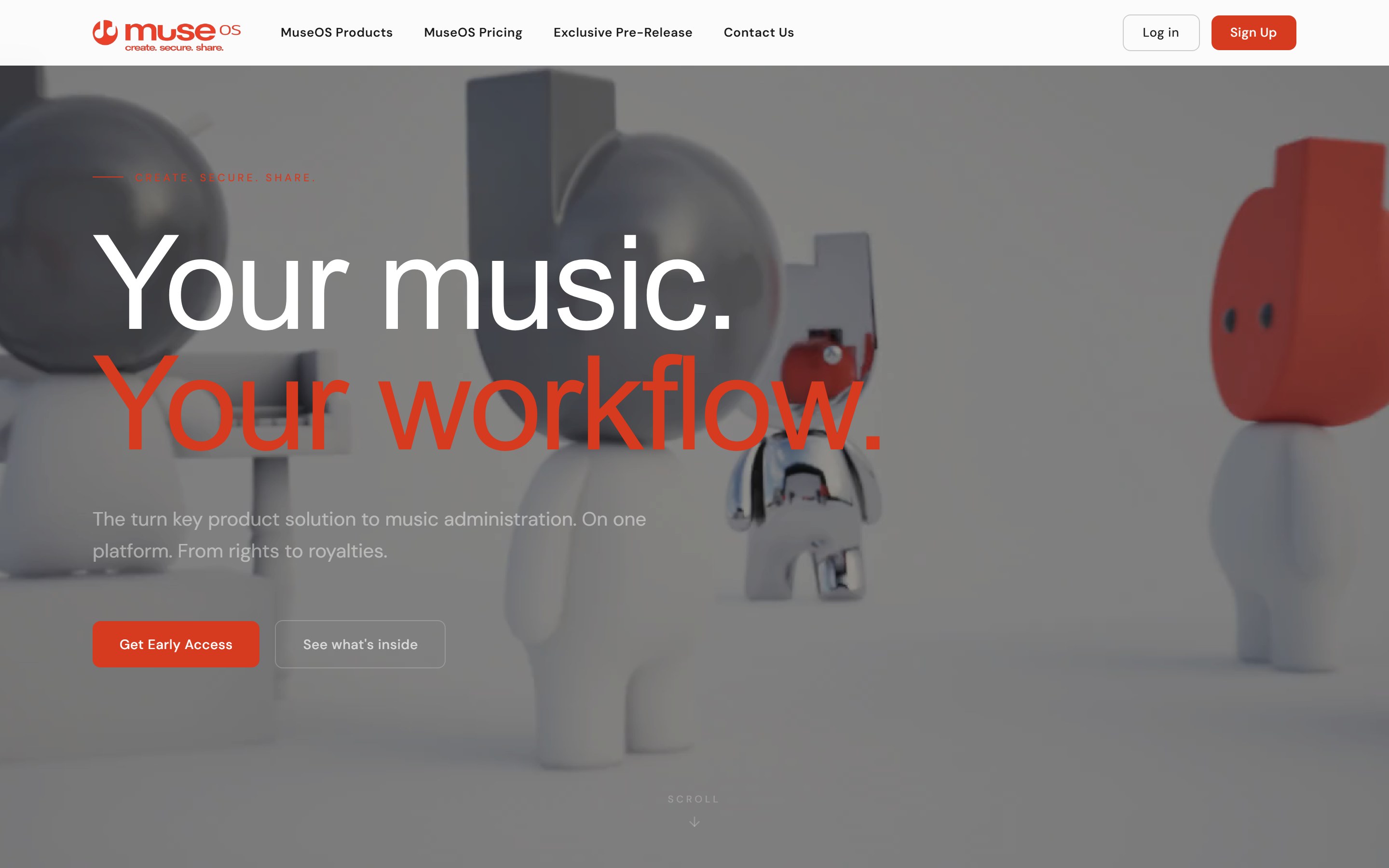
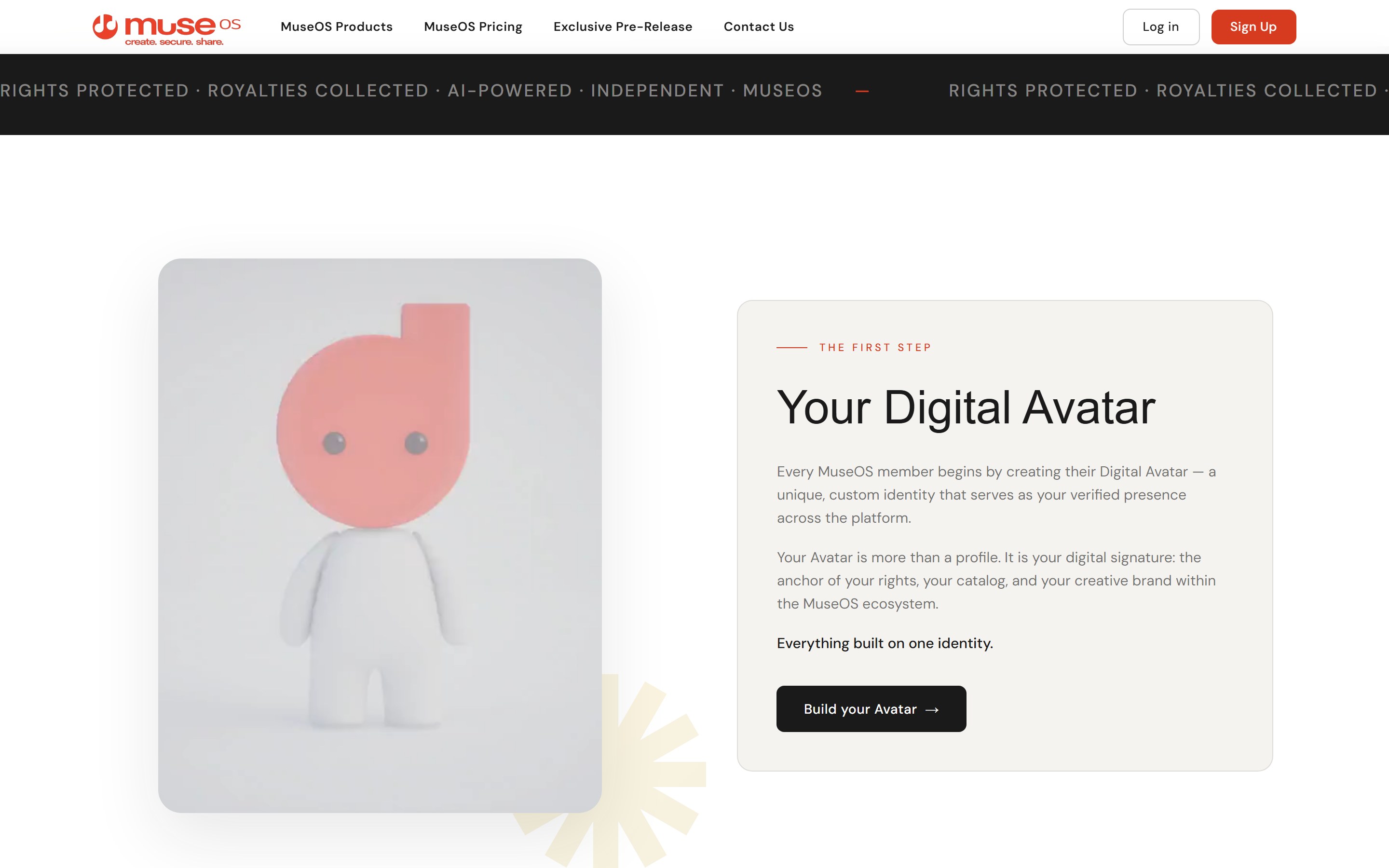
Today, an artist can register, create an avatar, and participate in the community. The wider intended journey is to upload work, manage rights and metadata, distribute songs, and pursue monetization. For sync placements, artists and industry professionals would connect around music needed for television, film, games, and other productions. These broader workflows remain in development.
Product experience and design
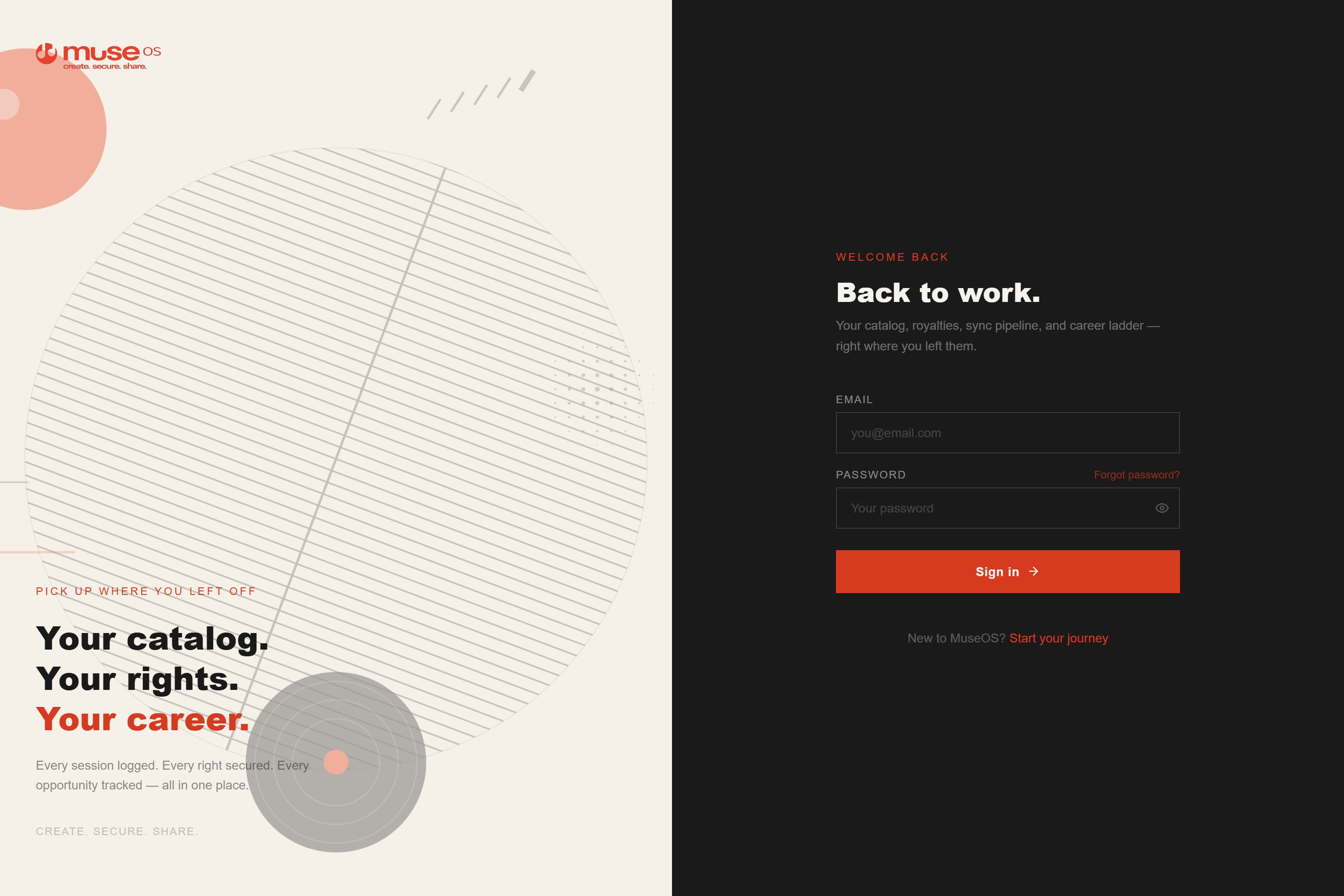
A warm vermilion, charcoal, and off-white identity with music-inspired geometric artwork. Open design follow-ups include reconciling brand colors with the shared semantic tokens and better differentiating success and warning states.
Architecture and implementation
The repository contains the product, the marketing website, and the API. Metadata validation is an important part of preparing releases for downstream distribution requirements. A NestJS backend and containerized delivery support API and AI-worker work.
Delivery approach
The engagement covered the website, logo, application design, engineering, and a prioritized roadmap, delivered with consistent sprint output. My role was to connect the founder's large vision to structured development, while keeping the live community milestone distinct from the distribution and licensing vision.
Results and current status
The artist community entry experience is live. The broader platform remains in development — distribution, copyright workflows, and sync placements are planned or developing capabilities, not launched services.
Palette
Brand red
#D63B1F
The brand — vermilion
Brand yellow
#E5BC3F
Secondary
Charcoal
#1A1A1A
Dark ground
Off-white
#F5F3F0
Warm light ground
Scope
Published snapshot of the codebase — useful technical context, not a measure of customer impact.
- App routes
- 46
- Frontend files
- 186
- API files
- 132
- Apps in the repo
- 3
Screens
Solution and scope
- Live: artist registration, avatar creation, and community participation
- Roadmap: music uploads, distributor integrations, and distribution workflows
- Rights and copyright workflows to help artists manage and protect their work
- A planned sync-placement marketplace connecting artists and industry professionals
Built with
- React
- Vite
- TypeScript
- Tailwind
- Radix UI
- NestJS
- Docker
- Jira
- Claude Code
- SPOT