MNTR
Helping a founder keep building quickly in Replit while adding engineering governance and a managed production release process.
- My role
- Solutions Architect & AI Solutions Architect
- Status
- Application in use; access and tenancy capabilities implemented
- Categories
- Product Development & Scale · Delivery Performance & Leadership
Outcome
Multi-tenancy, role-based access, and context separation are live — and the founder still ships features in Replit, with engineering review and production releases handled for him.
Business context
MNTR helps experts monetize their knowledge through mentorship, advice, and feedback — an AI mentorship and strategy platform for storytellers and founders, with chat, playbooks, courses, and missions. My engagement focused on strengthening a founder-built application that already had users and revenue.
The challenge
MNTR began as a Replit prototype with users. It needed multi-tenancy, role-based access, security, and separation of data and AI context. The founder also wanted to retain the speed of building features directly in Replit.
The goal: preserve founder-led experimentation while giving the growing application a stronger architecture and release process.
My role
I served as Solutions Architect and AI Solutions Architect, working directly with the owner on business needs, the solution plan, and priorities. I structured the work with my engineers and kept the owner involved through regular progress updates and delivered outputs.
I shaped a working model in which the founder continued building features and Assembled Systems provided engineering review and production preparation.
How the workflow changes
The founder builds and experiments in Replit, keeping the speed needed to put ideas in front of early users. Changes then pass through engineering review: pull requests are managed, release issues are cleaned up, and architectural concerns are addressed. Assembled Systems prepares and deploys the production update, and the tenant and access boundaries keep users and their context separate.
Product experience and design
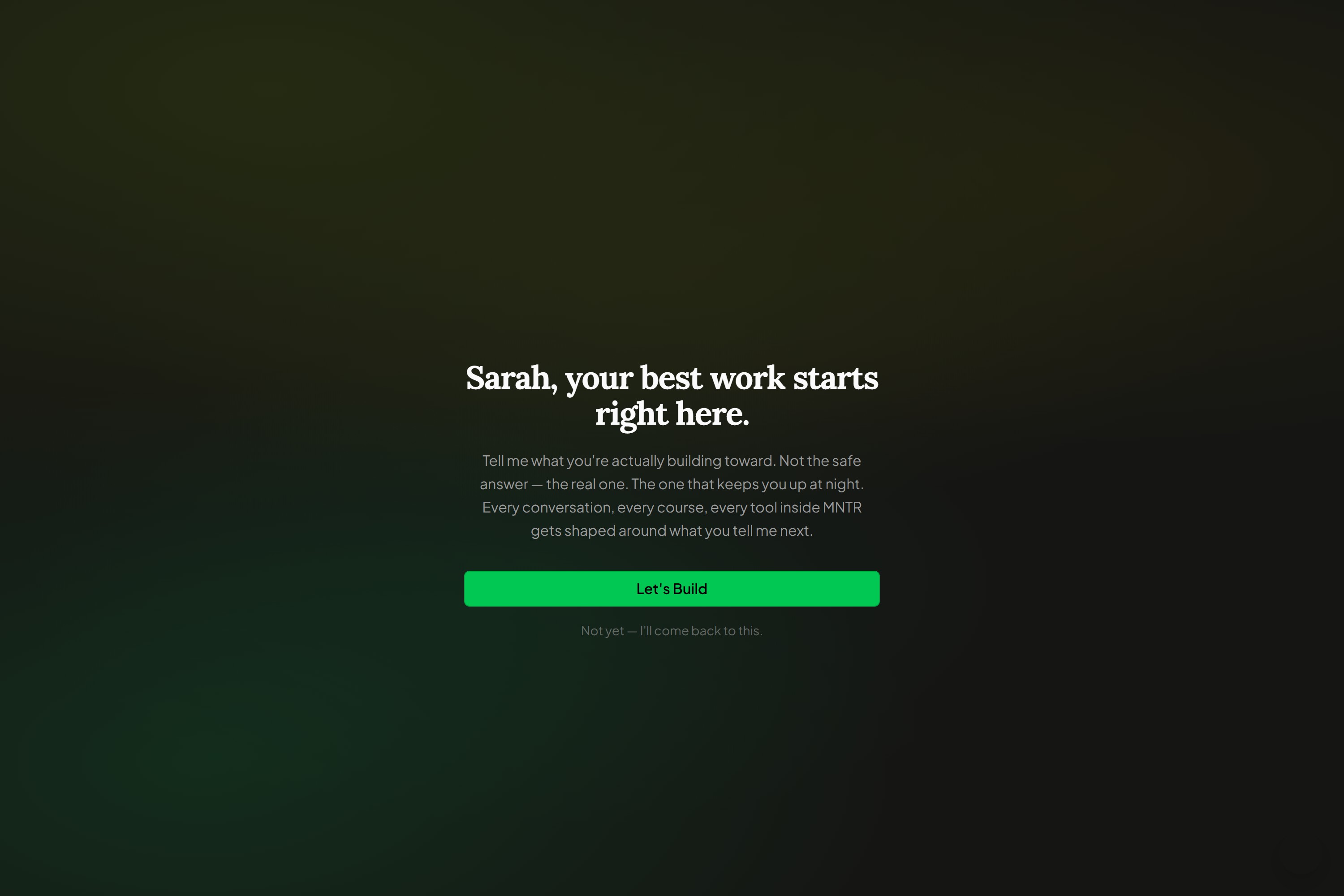
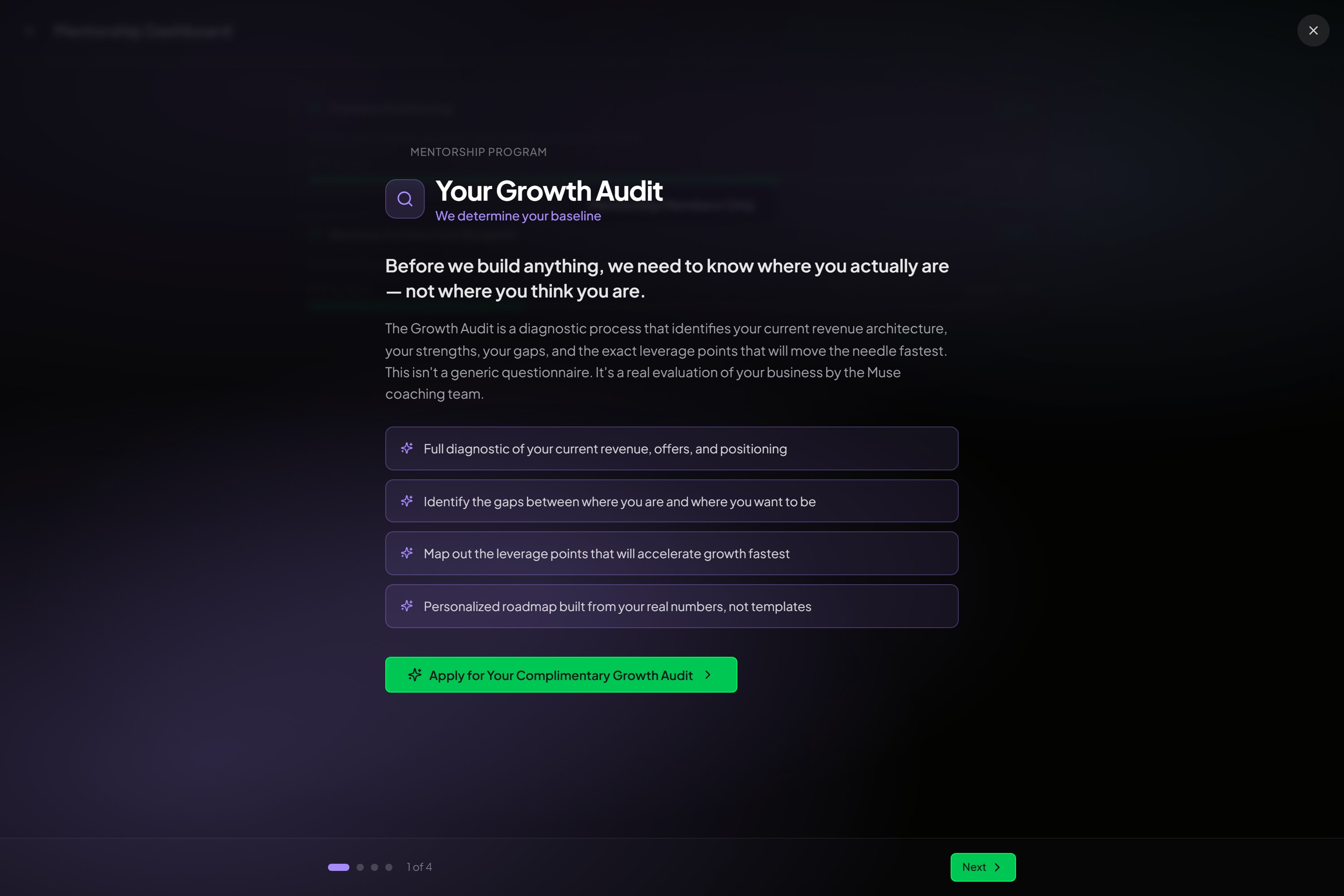
Goal-oriented onboarding, a growth audit, and a restrained green accent. The app prompts users to explain what they are trying to build, with an option to defer, so guidance can begin with useful personal context.
Architecture and implementation
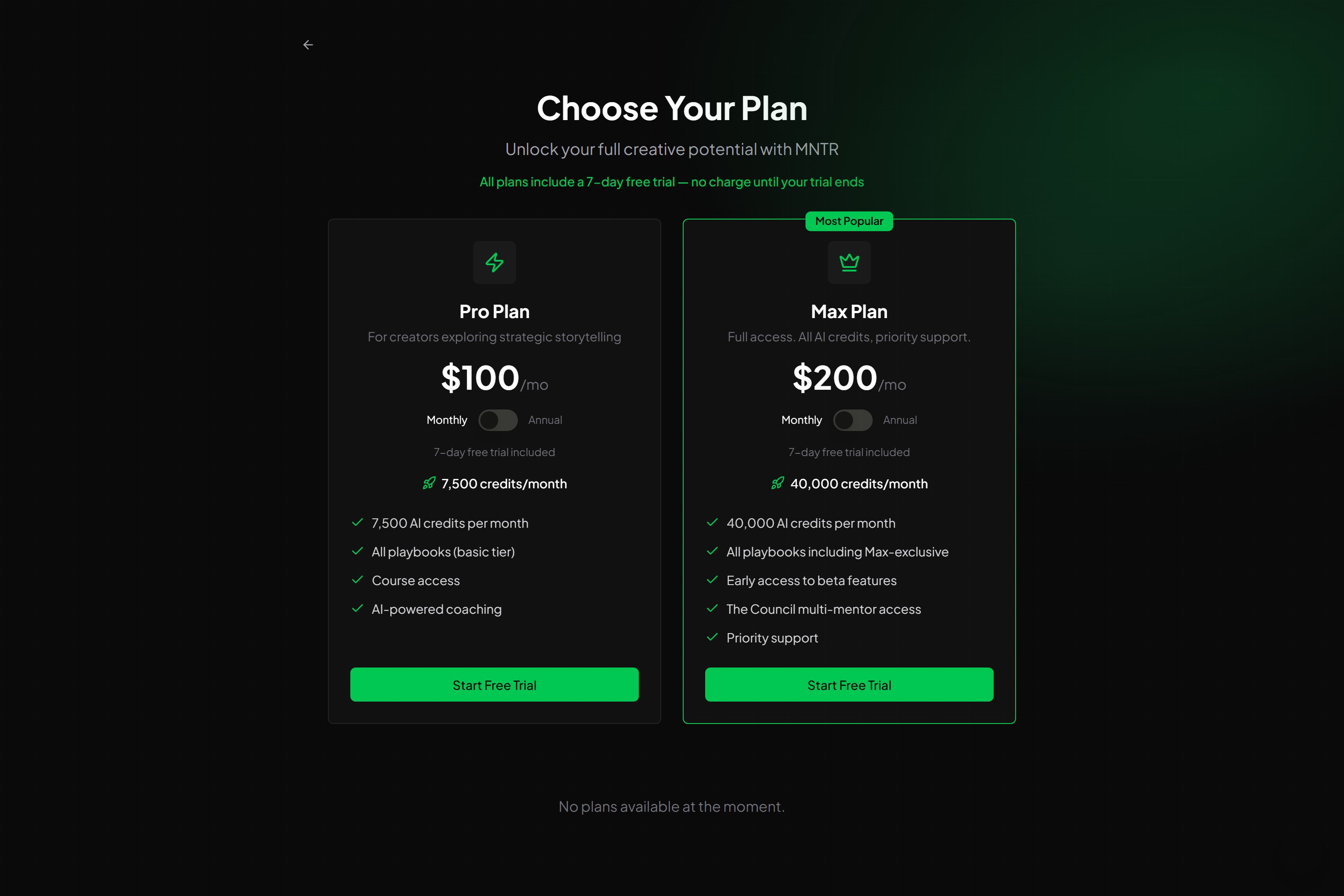
An Express and PostgreSQL backend with Drizzle. Gemini and Perplexity support different reasoning and retrieval tasks; Stripe supports credit-based monetization and Twilio off-platform communication. Our confirmed additions are multi-tenancy, role-based access, and context separation.
Delivery approach
The plan covered a complete audit, Replit cleanup, new onboarding, and scalability work, with a first milestone target of moving 50 users. The lasting engagement model is founder autonomy combined with engineering governance — a team responsible for preparing releases and publishing them.
Results and current status
The tenancy, access-control, and context-separation capabilities are implemented in the application. The founder continues creating features in Replit, with an engineering team reviewing and preparing the changes for production.
Palette
Primary
#00C753
Signal green — every action
Foreground
#171717
Near-black
Background
#F8F8F7
Warm off-white, light mode
Card
#FAFAF9
Barely lifted from the ground
Border
#E7E7E4
Warm hairline
Scope
Published snapshot of the codebase — useful technical context, not a measure of customer impact.
- Screens
- 100
- Components
- 167
- Server files
- 335
- Migrations
- 142
- Tests
- 193
Screens
Solution and scope
- Audited the existing application and planned improvements to its foundations
- Implemented multi-tenancy, role-based access, and separation of user data and AI context
- Reviewed and managed pull requests, cleaned up releases, and addressed architectural issues
- Prepared and published production updates on the founder's behalf
Built with
- React
- TypeScript
- Vite
- Tailwind
- shadcn/ui
- Express
- PostgreSQL
- Drizzle ORM
- Gemini
- Perplexity
- Stripe
- Twilio
- Replit