HiveHQ
Taking over an established SaaS application and accelerating feature delivery while supporting its existing customers.
- My role
- Solutions Architect & AI Solutions Architect
- Status
- Existing SaaS with active users and revenue
- Categories
- Product Development & Scale · Data & Decision Intelligence
Outcome
New features shipped while the live application continued to receive maintenance and user support, with faster delivery through the new process.
Business context
HiveHQ is a creator affiliate platform for TikTok Shop sellers. Its product helps sellers find suitable creators, organize outreach, and understand resulting commercial performance. The engagement began with an application already serving customers and generating revenue, so the work combined new development with responsibility for the existing experience.
The challenge
HiveHQ had paying users and an existing application managed by a freelance development team. The business wanted a more effective process for shipping improvements while handling maintenance and customer needs.
The goal: increase the pace of development and provide a consistent product and engineering process around a live business.
My role
I served as Solutions Architect and AI Solutions Architect, working directly with the owner on business needs, the solution plan, and priorities. I structured the work with my engineers and kept the owner involved through regular progress updates and delivered outputs.
How the workflow changes
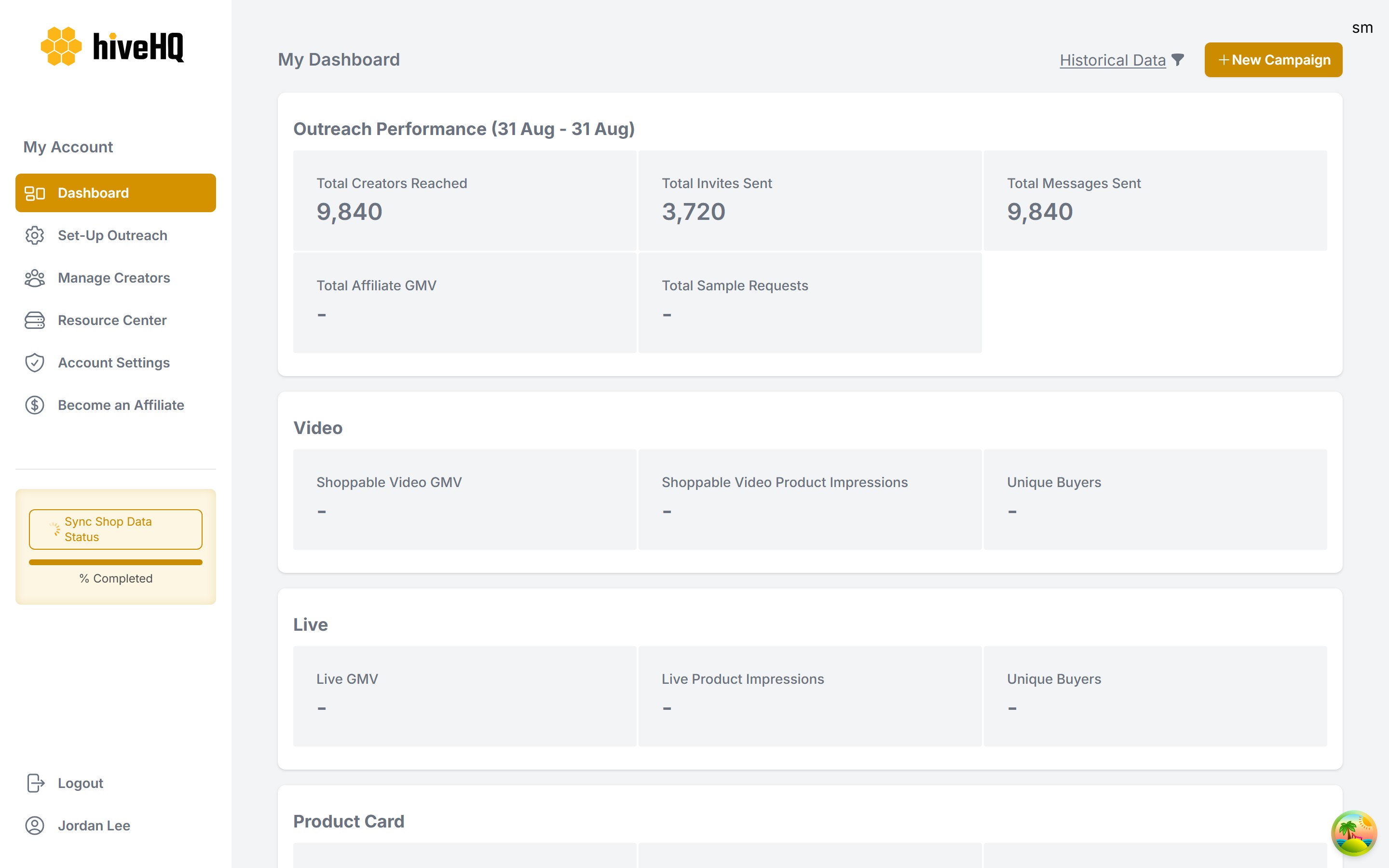
Sellers configure their account, connect their shop, and find creators to contact. Discovery and outreach sit alongside performance information. Our additions gave agency owners and other owners dedicated dashboard views and brought multiple data sources into the application, while the team continued supporting current users.
Product experience and design
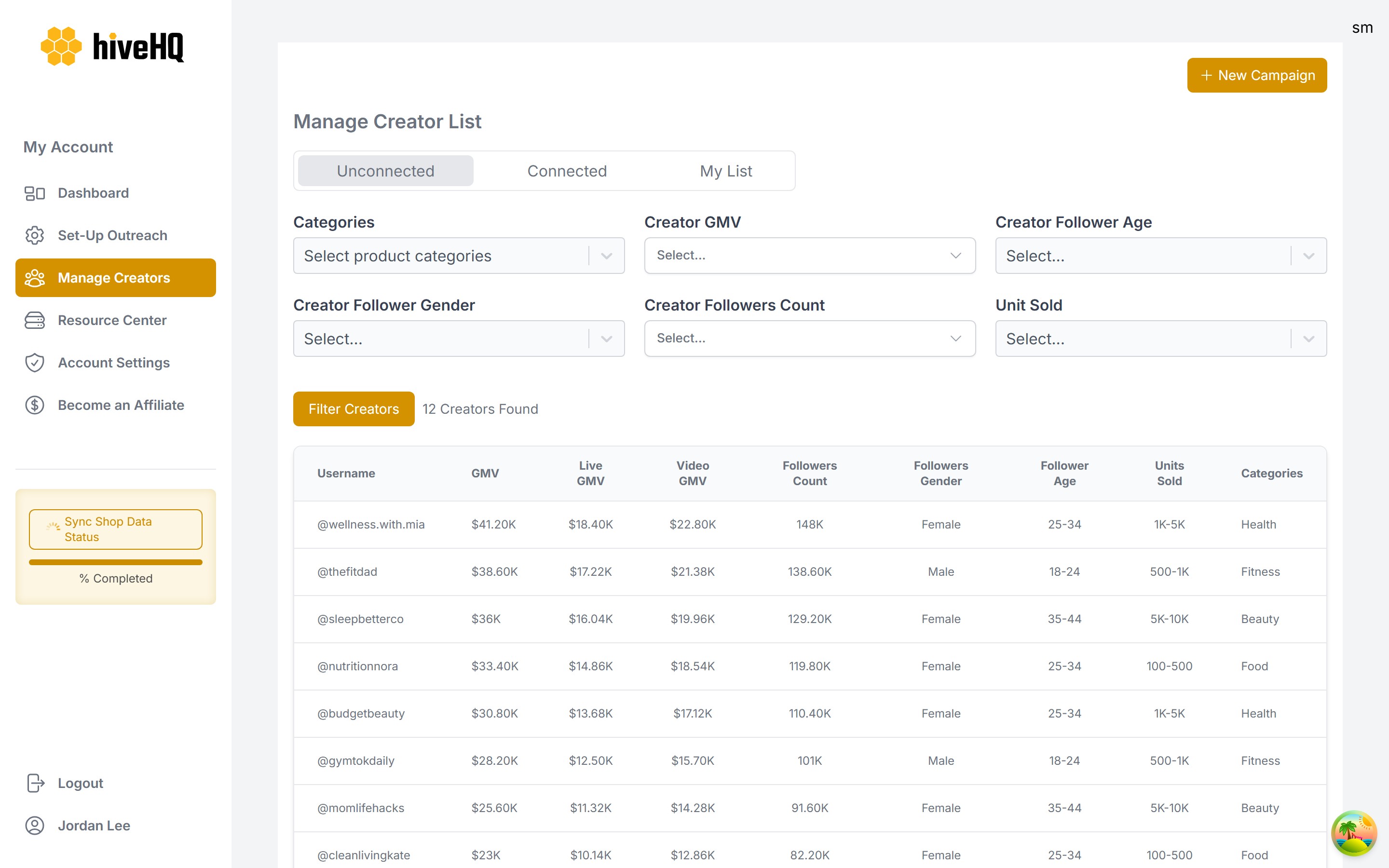
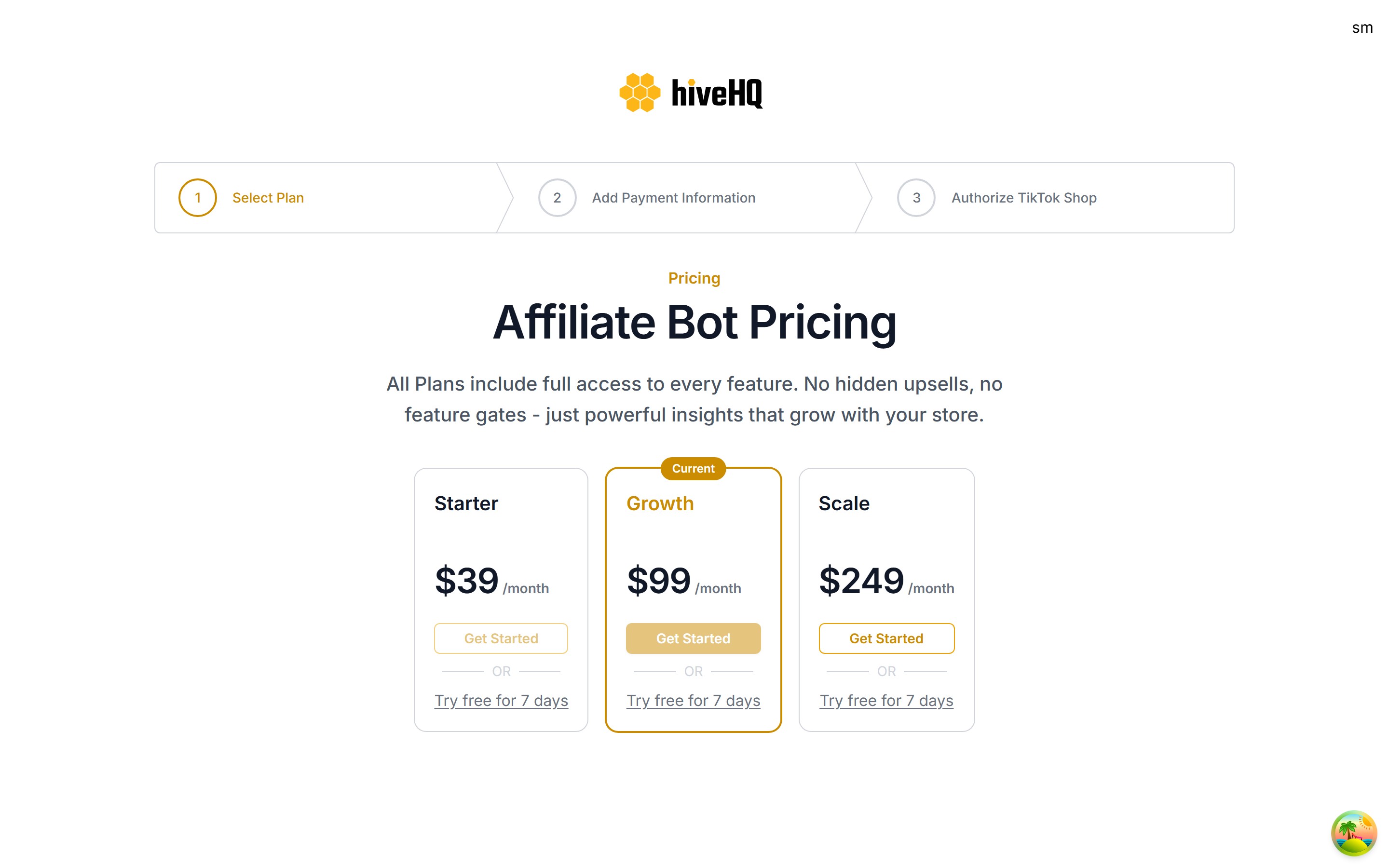
The product emphasizes filterable creator tables and separate connection states. Filters include category, GMV, audience demographics, followers, and units sold. An amber palette supports the brand. A setup wizard requires plan selection, payment, and shop authorization before the main experience.
Architecture and implementation
The product supports US and UK experiences from one codebase, with regional behavior determined by subdomain. Navigation and metrics vary by market, and live dashboard updates use WebSockets. These describe the application context — the takeover does not imply that Assembled Systems originated every existing capability.
Delivery approach
The improvement was a combination of delivery process and shipped product work. I connected the owner's priorities to an AI-powered engineering workflow, while the team handled maintenance and customer support needs. That made agency and owner reporting part of an ongoing product relationship rather than an isolated dashboard assignment.
Results and current status
New features were shipped while the live application continued to receive maintenance and user support. Delivery is faster through the new process.
Palette
Primary 50
#FCAE00
Amber — the brand
Primary 500
#D49200
Buttons, active nav
Primary 900
#B37B00
Hover and emphasis
Scope
Published snapshot of the codebase — useful technical context, not a measure of customer impact.
- Routes
- 30
- Source files
- 152
- Regions
- 2
- Onboarding steps
- 3
Screens
Solution and scope
- Took over ongoing development and maintenance from the previous team
- Introduced product management and AI-powered development workflows
- Built an agency owner dashboard and owner-specific dashboard views
- Integrated multiple data sources while supporting existing users
Built with
- Next.js 15
- React 19
- Tailwind
- Headless UI
- TanStack Query
- React Hook Form
- Zod
- Stripe
- Sentry
- WebSockets