
1st Class Concierge
Moving a New York City delivery business from manual messages into a connected request, dispatch, and tracking system.
- My role
- Solutions Architect & AI Solutions Architect
- Status
- Launched and actively used by the client
- Categories
- Operations Automation
Outcome
Launched and in daily use. Requests, driver assignments, and location visibility now sit in one connected workflow instead of scattered texts and calls.
Business context
The New York City business provides concierge delivery for stores and other clients. Agreements and pickup requirements existed, but execution depended on the owner coordinating messages and phone calls. The system needed to serve clients, dispatchers, and drivers with different information and tasks.
The challenge
The service coordinated food and product pickups through texts, emails, and phone calls. Clients sent requests through those channels, and the owner called or messaged drivers with assignments and addresses.
The goal: centralize requests and client requirements, coordinate drivers, and make delivery activity easier to track.
My role
I served as Solutions Architect and AI Solutions Architect, working directly with the owner on business needs, the solution plan, and priorities. I structured the work with my engineers and kept the owner involved through regular progress updates and delivered outputs.
How the workflow changes
A client opens the portal and submits a pickup request. The request is logged and dispatched with product details, pickup location, and destination. The driver accesses the assignment on mobile, receives directions, and shares location through GPS. The operations team can see movement and timing, helping it organize the service and follow delivery progress.
Product experience and design
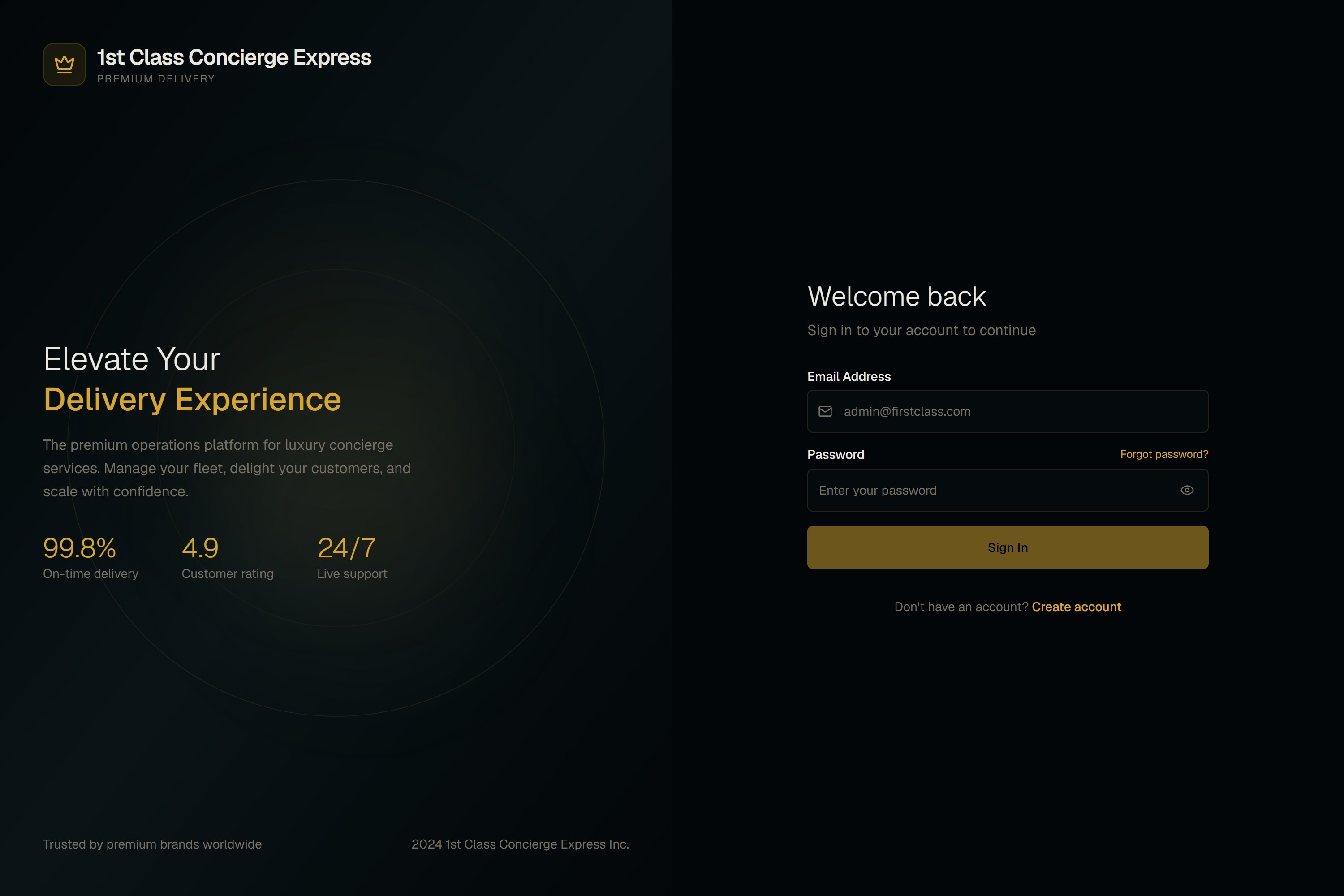
Different experiences for dispatchers, drivers, store owners, organization administrators, and a platform administrator. Maps and queues support dispatch; focused controls support drivers. Gold and near-black branding reflects the concierge service identity.
Architecture and implementation
The platform includes email or API intake and proof of delivery. Supabase Postgres row-level security separates organizations and roles. Integrated services cover maps, billing, email intake, and driver background checks.
Delivery approach
I worked directly with the owner to translate a message-driven service into a connected operational workflow. The value shows across the whole delivery journey: the request has a record, the driver has an assignment, and the business has location visibility.
Results and current status
The system has launched and is used by the client. Requests, driver assignments, and location visibility now sit within a connected workflow, reducing dependence on scattered communications.
Palette
Primary
#A07100
Gold — the whole brand
Accent
#A28137
Softer gold
Dark ground
#030608
Near-black, blue-shifted
Dark foreground
#EAE8E0
Warm off-white
Light ground
#F9F8F6
Light theme
Scope
Published snapshot of the codebase — useful technical context, not a measure of customer impact.
- Screens
- 67
- Migrations
- 92
- User roles
- 5
- Tables
- 25+
Solution and scope
- A database for client information, requirements, and pickup schedules
- A client portal where pickup requests are submitted and logged
- Dispatch workflows connected to product details, pickup locations, and destinations
- A mobile driver app with assignments and navigation
- GPS visibility into driver location and timing
Built with
- Next.js
- React 19
- TypeScript
- Tailwind 4
- Radix UI
- Supabase
- PostgreSQL
- Google Maps
- Stripe
- Resend
- Checkr
- Playwright
- Vitest