CoDesk
A shared organizational AI workspace for project context, collaboration, status questions, and work assistance.
- My role
- Product Owner · Solutions Architect & AI Solutions Architect
- Status
- Actively used by the Assembled Systems team
- Categories
- AI Agents & Assistants · Operations Automation
Outcome
Actively used by the team as a shared place to ask questions and collaborate — less time spent searching for context and checking reporting systems.
Business context
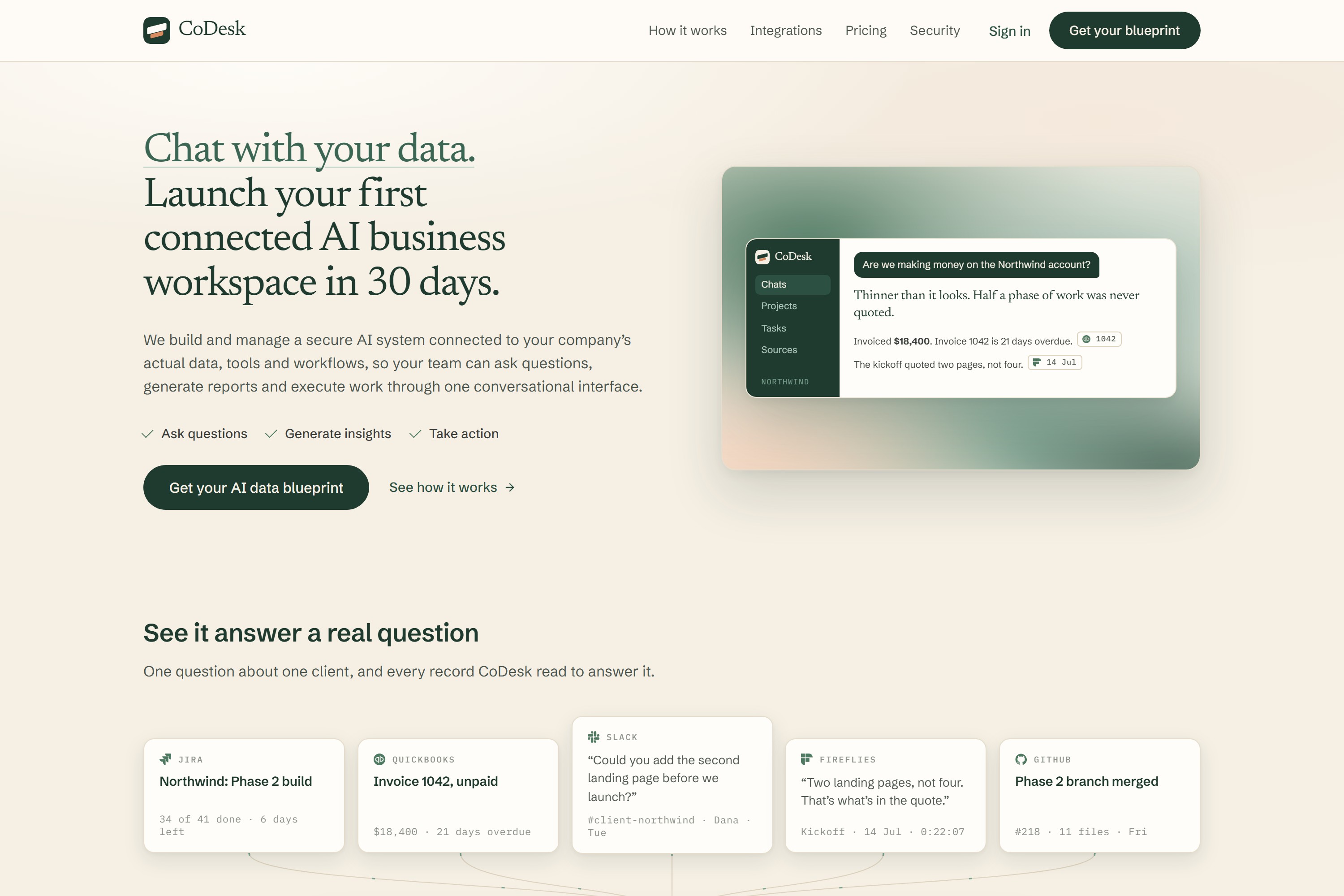
CoDesk began inside Assembled Systems as a shared alternative to isolated AI conversations and scattered project information. I wanted team members to collaborate around the same clients, features, and context, with a chief-of-staff-style way to ask about work and initiate useful actions.
The challenge
The team needed a common place to understand clients, features, and project activity — working from shared context and retrieving answers without relying on separate conversations or navigating reporting views.
The goal: a chief-of-staff-style assistant for the organization that supports collaboration and helps the team move work forward.
My role
I created CoDesk as an internal product and served as product owner, Solutions Architect, and AI Solutions Architect. I defined the team's needs, planned the solution, and structured implementation with my engineers.
How the workflow changes
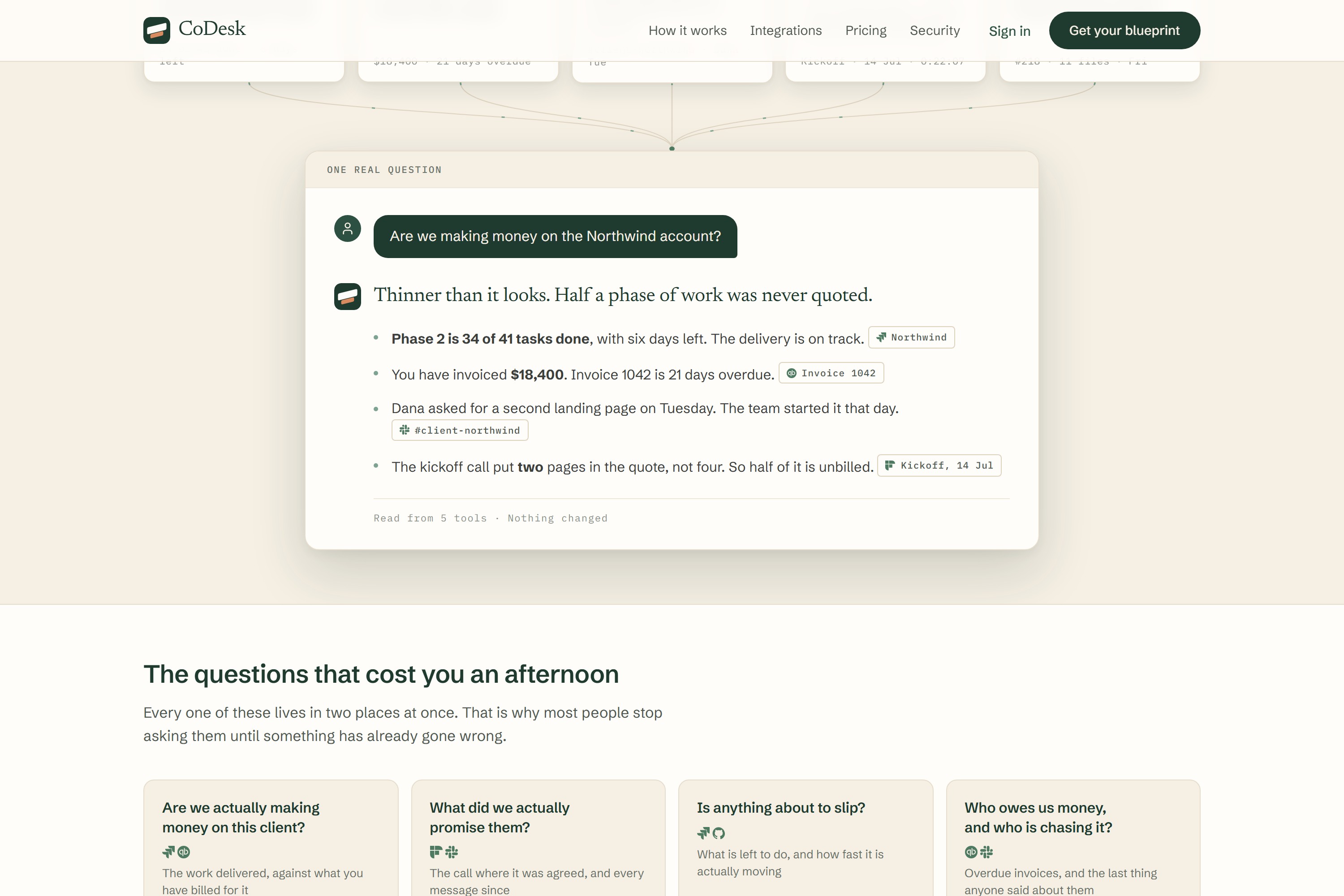
A team member works within a shared project, asks a question about a client or feature, and gets an answer grounded in the relevant organizational context. Agentic workflows cover writing emails, creating Jira tickets, and retrieving status updates — bringing understanding and execution closer together instead of sending people to separate reporting screens.
Product experience and design
Answers are grounded in retrieved records and source citations. The product shows its supporting evidence and makes connector availability visible rather than implying that every source is connected.
Architecture and implementation
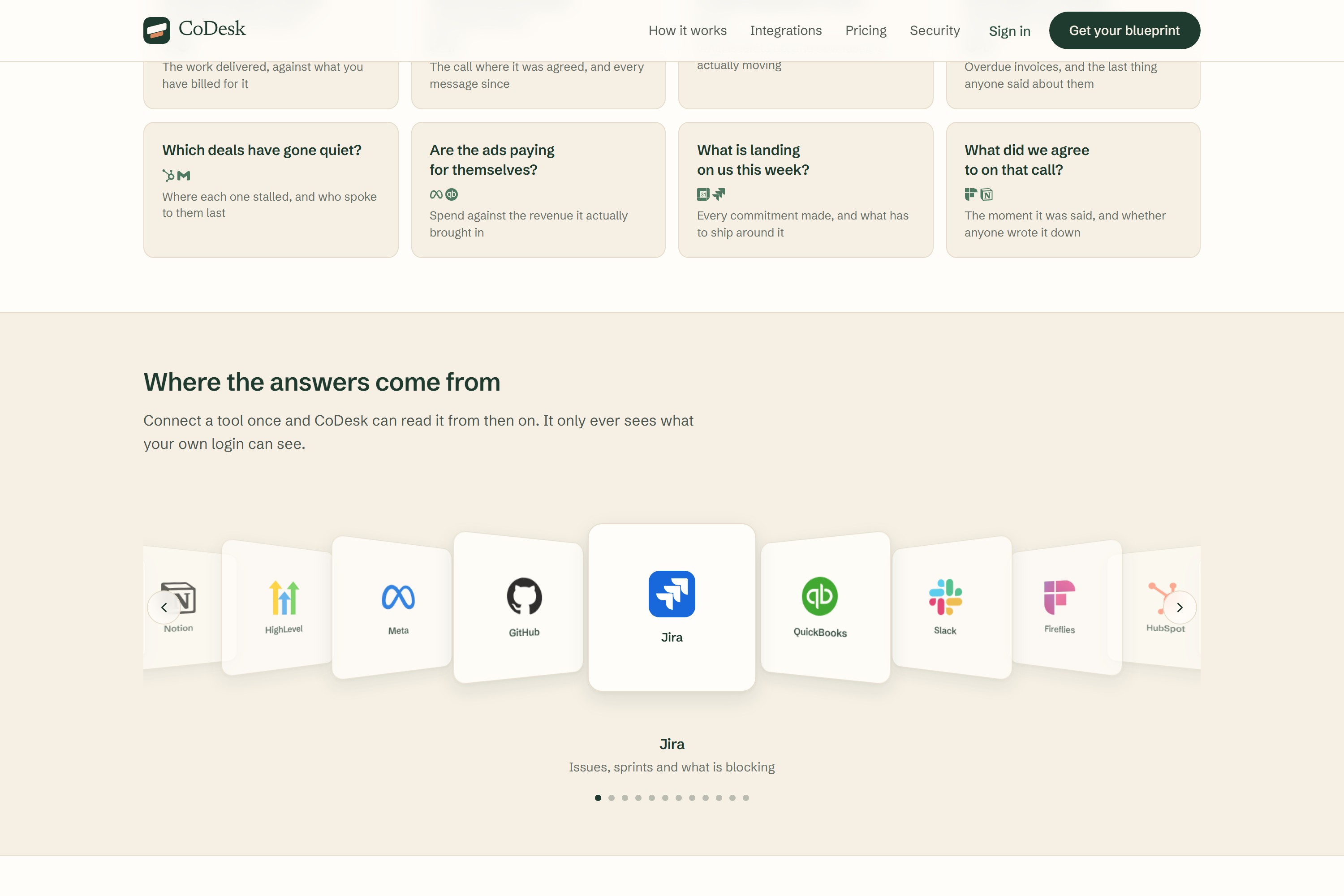
The earlier implementation used Jira API and GitHub MCP retrieval behind read-only connector boundaries, with Slack and Fireflies registered as stubs. The current workspace has grown into a broader, action-capable product in active use; the read-only snapshot is retained here as history.
Delivery approach
As internal owner and architect, I defined both the business need and the collaboration model, and worked with engineers to create a central organizational workspace — keeping the source-grounding principle from the first version while adding shared context and supported actions.
Results and current status
CoDesk is actively used by the team. It provides a shared place to ask questions and collaborate, reducing time spent searching for context and checking reporting systems.
Scope
Published snapshot of the earlier version — technical context, not a measure of customer impact.
- Screens
- 21
- Components
- 93
- API routes
- 71
- Connectors
- 4
Screens
Solution and scope
- A conversational workspace scoped to the internal organization
- Team collaboration within projects using shared information and context
- Questions about client needs, features, progress, and status
- Agentic workflows for writing emails and creating Jira tickets
Built with
- Next.js
- React
- TypeScript
- Tailwind
- Jira API
- GitHub MCP
- Vitest